
Our Commitments

We are committed to improving our products, step by step, and helping consumers making informed choices

Hero Banner Image

Our key achievements

  • .

  • .

  • .

HTN Keratin Content Block 1

Brand Sustainability Report

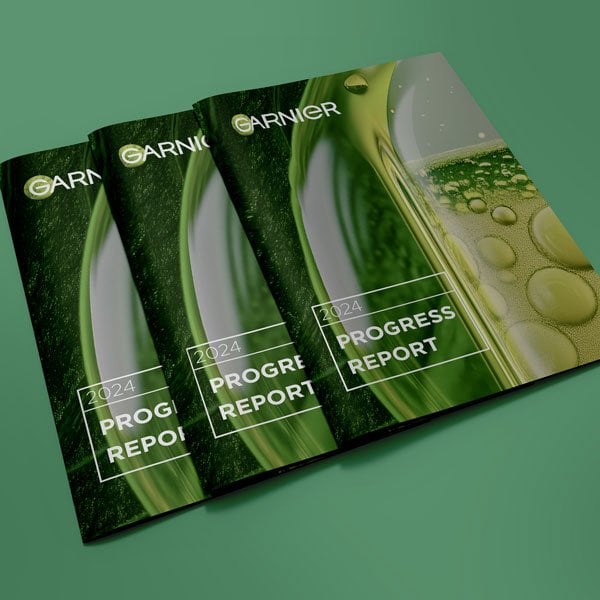
Over the last six years, we have been publishing the progress we have made to work on our environmental impact, focusing on the re-designing of our products. For instance, Garnier is introducing more recycled materials in our packaging improving our formulas, and helping consumers make more informed choices.

Read our Progress Report
INFORMED CONSUMPTION

Read the full 2024 Progress Report to get more insights

Download Report

FAQs

What is the difference between recyclable plastic packaging and recycled plastic packaging?

Recyclable plastic packaging can be recycled in practice and at scale*. It is collected, cleaned and sorted by material (type of plastic). Then, it is shredded, washed, melted and reformed into pellets, or granulate. This granulated plastic is used to make new packaging. "Recycled plastic packaging" is the term that refers to packaging materials made from plastic that comes from a recycling stream. In 2025, Garnier sourced 66% of its  plastic packaging  from recycled sources.  
*According to the Ellen MacArthur Foundation, "in practice and at scale" means packaging needs to meet the thresholds of being recycled/composted at a 30% rate across multiple regions, collectively representing at least 400 million inhabitants. 

Is Garnier using less virgin plastic?

Yes, in 2025, Garnier reduced the use of virgin plastic in its product packaging by 63% in absolute terms compared to 2019.

Has Garnier reduced its CO2 emissions?

Garnier reports its carbon emissions in its annual Progress Report, taking into account scopes 1,2 and 3. This means considering not only direct emissions but also downstream emissions from our suppliers  Compared to 2019, Garnier reduced its carbon emissions by 10% in 2025.

Does Garnier use petrochemical ingredients?

Yes, however Garnier is committed to using more plant-based ingredients: in 2025, 68% of its ingredients were derived from nature (plant based or abundant minerals) or from recycled materials,  up from 63% in 2022.

Does Garnier use ingredients from Biotechnology?

Yes, Garnier uses ingredients from Biotechnology.
Biotechnology uses living organisms, like bacteria, yeast, plants, or their cells to make ingredients. Garnier uses active ingredients like Pure Vitamin C, Hyaluronic Acid, and Lactic Acid that are made using biotechnology. Check out page 17 of our Progress Report for more information.

What is the difference between Vegan and Cruelty Free?

Vegan refers to whether or not an ingredient or formula is made from animal-derived ingredients (e.g. beeswax). Cruelty Free refers to whether the ingredient is tested on animals. It is possible to have a vegan ingredient that is not "Cruelty Free" (e.g. a plant-based ingredient that is tested on animals). 99.9% of Garnier's ingredients are vegan (not derived from animals) and Garnier is approved by Cruelty Free International.